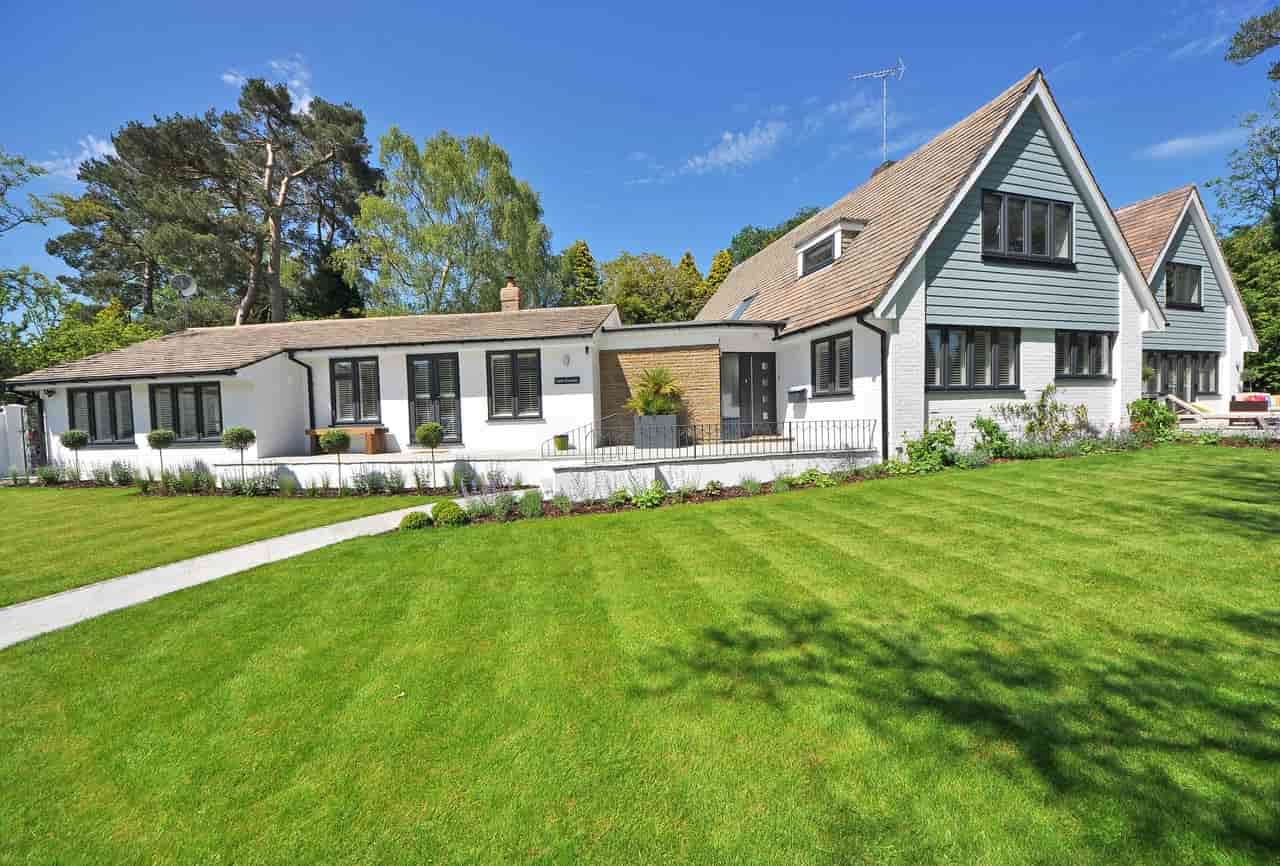
Creating curb appeal is one of those landscaping areas where you want your front yard to stand out from surrounding yards without being totally out of place from the rest of the neighborhood. Keep that in mind while looking at these pictures.
Along with this gallery, there are several examples front yard landscape designs and curb appeal in the designs gallery. There's also one rather interesting idea that I created that's worth taking a look at. See: curb appeal.
You'll find it much easier to come up with an idea if you don't try to find an exact match for your yard. Gather ideas from several sources and mix and match. Generally, most yards are unique in shape. It can be very frustrating to try and find an exact example of your front yard.
A good habit while browsing: instead of saving a whole photo, write down the one element that caught your eye. "Wide bluestone landing at the door." "Three of the same grass repeated along the walk." "Dark mulch against light gravel." Ten notes like that are far more useful than ten photos, because they translate to any lot shape, any house style, and any budget.
This gallery is free to visitors of The Landscape Design Site. Also see my original pictures gallery for more photos, examples, and plans.

Start With Structure, Not Plants
Before you buy a single shrub, decide where the lines are. A front yard reads as designed when the bed edges, the walkway, and the lawn (if you keep one) form simple shapes that relate to the house. Bed lines should be either crisply geometric — squared off, parallel to the foundation and drive — or one long, lazy curve. What kills curb appeal is the wobbly scalloped edge that changes direction every four feet, because the eye reads it as indecision.
Practical rule of thumb: foundation beds should be at least as deep as one-third the height of the wall behind them. A single-story wall about 10 feet tall wants a bed roughly 4 feet deep; a two-story front wants 6 to 8 feet. Beds that are too shallow are the single most common reason a house looks like it is sitting on the ground instead of settled into a garden.
Fix the Walkway Before the Flowers
Standard builder walkways are 3 feet wide, which forces two people to walk single file and makes the whole entry feel pinched. Widening to 4 or 5 feet, and adding a small landing of at least 5 by 5 feet in front of the door, changes the feel of a house more than any planting will. If replacing concrete is out of reach this year, you can visually widen an existing walk by running a 12- to 18-inch band of gravel, brick, or low groundcover along both sides.
Frame the Front Door
The door should be the destination your eye lands on. Give it a matched pair of something — upright shrubs, planters, small ornamental trees, lanterns — so there is a visual gateway. Paint or restain the door in a color that contrasts with the siding, upgrade the house numbers to something legible from the street, and replace undersized porch lights; fixtures should be roughly one-quarter to one-third the height of the door to look correctly scaled.
Plant in Layers, and Repeat Yourself
Nearly every front yard that looks professionally done follows the same three-layer arrangement: a tall anchor layer (a small tree or upright evergreen at the corners of the house), a mid layer of mounding shrubs at 2 to 4 feet, and a low front layer of groundcover, perennials, or ornamental grass that spills toward the edge of the bed. Layering is what gives a bed depth from the street rather than the flat, single-row look of builder landscaping.
Then repeat. Choose three to five plants and use each of them in odd-numbered groups of three, five, or seven, echoing the same plant on both sides of the walk. A small palette repeated rhythmically always looks richer than a collection of single specimens, and it is cheaper because you can buy smaller sizes and let them fill in.
Plan for All Four Seasons
Curb appeal has to hold up in February, not just in May. Aim for roughly a third of the mid and tall layers to be evergreen so there is structure in winter, then stack in something that blooms in spring, something in summer, and something with fall color, berries, or seed heads. Bark, twig color, and the shape of a dormant grass all count as interest once the flowers are gone.
Right Plant, Right Place
The most expensive mistake homeowners make is buying a shrub for the size it is in the pot rather than the size on the tag. Check mature width, then set the plant that distance from the wall or walk, and resist filling the gaps with more shrubs — fill them with annuals or mulch for two seasons instead. Also match plants honestly to how much sun the front of the house actually gets and how much water you are willing to give them.
“The front yards that still look good five years later are the ones where the plant list matched the site instead of the wish list — right exposure, right mature size, right water needs,” says Marisol Reyes, senior design consultant at Desert Vine Landscaping.
Regional Reality: Water, Climate, and Maintenance
What reads as curb appeal in Ohio does not translate to Arizona. In cool, humid regions a clipped lawn and broadleaf evergreens look natural; in the arid Southwest the same look is expensive, thirsty, and slightly out of place, while gravel mulch, boulders, agave, and desert-adapted trees such as palo verde or desert willow look both intentional and comfortable. Work with your climate and the yard will cost less and look better.
Regardless of region, be honest about maintenance. Sheared hedges need trimming two or three times a season, flower beds need deadheading, and gravel needs occasional weeding and refreshing. If you travel or simply do not enjoy yard work, choose slow-growing shrubs, mass groundcovers instead of fussy perennials, and put irrigation on a timer with drip lines in the beds.
Mulch, Edging, and the Cheap Wins
The highest-return weekend in landscaping is almost always the boring one: cut a clean spade edge on every bed, pull the weeds, top-dress with 2 to 3 inches of fresh dark mulch (keeping it off plant stems and trunks), power-wash the walk, and trim anything blocking a window or the porch light. Homeowners routinely spend thousands on plants when a hundred dollars of mulch and a sharp edging line would have delivered most of the visual improvement.
When to Bring In Help
Do-it-yourself makes sense for planting, mulching, and edging. Grading, drainage, retaining walls, irrigation, and large trees are worth hiring out, and if you are comparing local contractors it helps to read reviews of the crews that made the cut before you start collecting bids. Ask for a planting plan, a plant list with mature sizes, and a written maintenance expectation, not just a lump-sum price.
Putting It Together
If you tackle a front yard in stages, work in this order: clean up and edge what is already there, fix the walkway and entry, establish the bed shapes, plant the tall anchors, then fill in the mid and low layers, and finish with lighting, containers, and a fresh coat of paint on the door. Working structure-first means every dollar builds on the last one instead of being torn out later.
Take a photo of your house from the middle of the street, print it, and sketch over it — that single exercise reveals scale problems your eye glosses over when you are standing in the yard. Then start with the smallest change that makes the biggest difference, live with it for a season, and keep going. Curb appeal is cumulative, and a front yard that improves a little every year almost always ends up better than one designed all at once.